
Sunday, August 27, 2017

How Learning and Unlearning Finally Got Me Marching

So already, I've been thinking about what's gotten me up off my seat and onto my feet in the months since Donald Trump became president. It's not like the problems I've marched against--women's persistent inequality, denial of climate change and its threat to our collective well-being, white supremacy--haven't been issues for a long time. 

For the many years that I was a public school educator, I tackled these issues in the classroom and staff room and told myself I was doing enough. There were only so many hours in a week, I reasoned periodically, and I spent a lot of them doing what I could so that my students were not only intellectually and psychologically prepared for a post-high school world that might push back as they stepped forward, but aware of and confident in their knowledge, learning abilities, and capacities for resilience.

My fear of being injured and my aversion to conflict partially explained my reluctance to march. But the real reason for it was that I lacked the sense of urgency that compelled others to show up and stand up

Maybe it was because I wasn't really worried about what would happen to me personally as a result of some of the situations that enraged me. Maybe it was because I'd grown used to doing nothing more than talking and writing when I was morally outraged. What I do know is that when push came to shove, I often gave myself a pass and let others be the ones who put themselves on the line. While in one minute l could explain eloquently why some situation was too wrong, too dangerous not to be pointed out, addressed, and remedied right now, in the next I could give myself permission to leave it up to other people to raise the awareness of and/or confront those who needed to change. I generally didn't imagine that I would need to change. A sense of urgency and a sense of "being beyond": the two just don't go together.

The CRLS Fifth Floor--from the Fogg Art Museum
This blog post is about how I finally developed that sense of urgency. It's a story of relationships, stories, and events that have unfolded and intersected over time. Many of them are importantly connected to my thirteen years as an English teacher at the Pilot School, the democratic alternative school that was part of Cambridge Rindge and Latin School from 1969 to 2000. Other influences are the result of the times in which we live.

My protracted journey to urgency began in 1988 when I arrived at the Pilot School. Donald Burroughs, who'd joined Pilot's English Language Arts Department faculty four years before me, was assigned to be my mentor, and I was in great hands when it came to learning the culture of Pilot, the culture of CRLS as a whole, and the best ways to manage, survive, and even enjoy the never-ending stream of events and meetings that defined the Pilot School year. We became friends fast: as people who'd gone to elementary school in Boston, we knew a lot of the same songs, and we had experiences of Boston's racism and anti-semitism respectively. We also couldn't help laughing at some of the same people. And we both loved choral music and roasted chicken.

While we were at the Pilot School, Donald participated in a  National SEED (Seeking Educational Equity) Project training and quickly became a member of SEED's national faculty. Soon thereafter, he began sharing his experiences and expertise with us at Pilot School. When I went through a formal SEED training with other CRLS faculty around 2000, I again was the beneficiary of Donald's values, sensibilities, and professional knowledge and skill

As SEED's web site explains, 
"SEED leaders design their seminars to include personal reflection and testimony, listening to others' voices, and learning experientially and collectively. Through this methodology, SEED equips us to connect our lives to one another and to society at large by acknowledging systems of oppression, power, and privilege."*
That SEED training marked my first formal encounter with the concept of "systems of oppression, power, and privilege"; before that, I had understood the problem of racism and other "isms" as constituted by people's attitudes and direct experiences with one another. For the first time, I began to understand "privilege" as a function of institutional dominoes laid out, sometimes unintentionally but usually intentionally, to fall a certain way. As a white woman, I benefited by privilege related to race but not by privilege related to gender.

Donald and I had both always understood the power of students' stories--not just for the students telling the stories but for the students listening to the stories. However, in SEED training, telling our own stories and listening to one another's were essential for "creating conversational communities that drive change."**  Change that challenged "systems of oppression, power, and privilege" required that we bring our most self-aware, other-responsive selves to the the table--which we couldn't do if we didn't recognize our assumptions about ourselves and others, as well as our personal experiences of perpetuating systems we increasingly understood as problematic. The group, supported by the tools and expertise provided by the SEED trainers, helped us do this

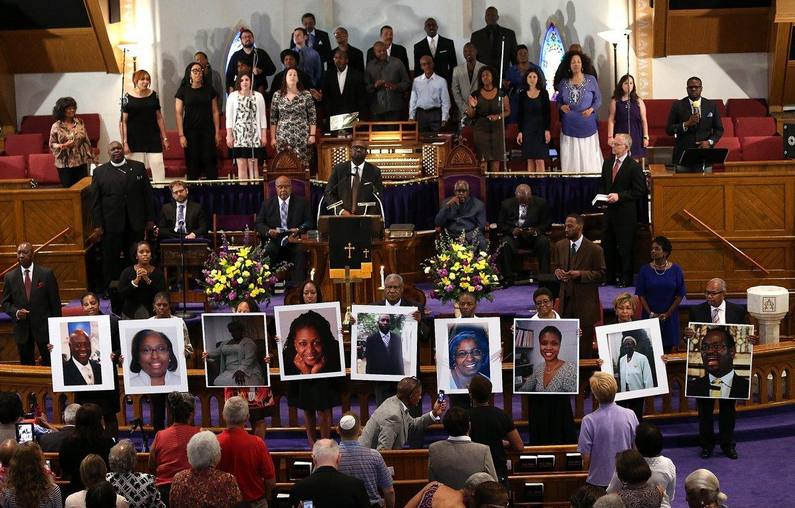
So I had this SEED background and a very good friend/colleague with whom to discuss school situations  and current events, etc. And there were always so many national events to process, kept front and center by endless television news coverage and then by social media. An African-American president whose American-ness was routinely questioned. The deaths of numerous unarmed black men at the hands of police officers. A massacre in Charleston perpetrated by a white shooter who'd been welcomed into a prayer group meeting in a black church. Few convictions of police officers who'd zealously arrested and/or shot unarmed black men. Efforts to take away the voting rights of citizens who lacked certain kinds of identification. As Huck Finn would have put it, "It was enough to make a body ashamed of the human race." I began sending money to organizations fighting the pervasive racism to which these events testified. But I didn't march with these organizations when they marched. Sometimes I told myself that the best thing I could do was give money--and it was definitely helpful. But I also knew that giving money was easy and safe. Still not enough urgency.

At the same time, the use of social media was on the increase especially by younger people--so especially by Donald's and my former students. TThe Pilot School kids whom I know--who are now generally between 34 and 49--have been and continue to be particularly active and apt to debate social and political problems and best responses to them. A number of them are in the "social justice business": some run non-profits, some are diversity consultants; others are educators, lawyers, storytellers, past and present candidates for political office, and artists for whom eradicating systemic racism and cultivating full racial equality is a high priority. 
Whatever career choices these former students have made and are making, the majority of them are not at all averse to "getting into it" when it comes to questioning one another's ideas and understandings and explaining their own. They push one another. And they push me--sometimes when they don't know they are and sometimes when they absolutely mean to. In a blog post entitled "Will You Be There, Good White People?", which I published just after the Charleston massacre***, I talked about being called out on Facebook by one of these former Pilot students. It was an uncomfortable but acceptable experience. I learned I could handle uncomfortable. And I was going to have to handle it if my plan was to speak up when I felt white friends and acquaintances needed to recognize the ways in they were not only benefiting from white privilege, but actually perpetuating it. I wasn't marching yet, but I began speaking up more.

Charlston occurred less than two weeks after I'd had a profound learning/unlearning experience related to racism and American history. The teacher team who lead the school-based seminar in which the CRLS Kimbrough Scholars are required to participate had decided they wanted to improve and articulate the seminar curriculum before the next school year. So I decided to volunteer my Teaching for Understanding**** knowledge and my facilitation skills to support their efforts.

The Kimbrough Scholars Teacher Team and Others
The mixed--race teacher team consists of CRLS career educators and other professionals, including one medical doctor. Several members were Civil Rights Movement-era activists; two members have children who attended the Pilot School. In other words, there is much diverse experience and tremendous knowledge in this group of well-formed personalities. My challenge was going to be getting these strong, passionate individuals to arrive at consensus about what their students must come to understand, given the relatively short length of the seminar and its ambitious purpose: to provide the students with the historical and cultural contexts in which their onsite legal research and restorative justice efforts would resonate and be situated.

The teacher team was highly skilled at creating "understanding goal" questions to guide and motivate student inquiry. But in my capacity as their Teaching for Understanding "enforcer," I insisted that they develop some common and thorough----if still evolving--answers to those questions: if they didn't, they risked teaching at cross purposes and leaving their students more confused than enlightened.

My personal learning and unlearning about American history occurred as I listened in on the group, shared with them what I was hearing as points of divergence and convergence, read and thought along with them as they prepared to make and then ultimately made their decisions about what they really wanted their students to understand. Along the way I unlearned the American history I had learned in eighth and eleventh grades and from Gone with the Wind. Reconstruction was not best understood as chaos and carpetbaggers; the Civil War really was fought over slavery, not states' rights, after all. 

Looks Innocent Enough: Where I Went to Junior High
Since the Civil War monuments have started coming down in large numbers in the past few weeks, I've thought a lot about my eighth grade history teacher, whom I really liked. She was from the South, she wore a Confederate War uniform when she taught about the Civil War, and she frequently typed "Save your Confederate money, boys; the South will rise again" at the bottom of exams and assignment sheets. Back then I saw it as quirky, meaningless, and funny; I no longer view it that way--especially given that Martin Luther King, Jr. had been murdered less than a year earlier. But it took me much too long to put these pieces together and to get to this place.

What can I say except that when you realize that you--and probably most people educated around the same time you were--have been handed a historical narrative that deliberately obscures the motivations and and purposes behind events and actions, you get angry and sad. You understand how easily you've been manipulated, and you have to wonder how complicit you've been in your own manipulation. In addition, you regret that your having been manipulated has had some extremely negative consequences for other people.

So when your president starts manipulating, obscuring, and manufacturing dangerous consequences for whole segments of the population, your sense of urgency stirs. And when your president speaks in outright defense of white supremacists, your sense of urgency ignites. That's why I've finally started marching: I feel I must stand up and be counted at this moment when what this country will and won't be in the future is at stake. Right now, it feels more dangerous to sit at home or in a restaurant lamenting what is and what could be than to go outside and make visible to the camera-holding world with whom and for what I stand.

A book I've been reading lately describes Judaism as "a system of tikkun olam, improving the world and all the souls in it, in the hope that they will carry their newfound knowledge into the family and marketplace" (ix).****** At the moment, I believe there are some souls out there that want no improvement, that simply want to get their own dangerous, dehumanizing way. Because I suspect there's presently no chance of dialogue with them, I march simply to make sure that they and whoever else is watching understand that their views and objectives are not acceptable to me and those marching with me. 

In some situations, talking is precisely what's needed: I'm going to keep bringing up white privilege when I feel that it's operating and therefore affecting the rights, freedom, and safety of non-white people. In other situations, the possibility of authentic conversation is probably nonexistent--and may well stay that way. So I'll march. More activism is needed. Hope to see you on the street.

* National SEED Project. (2013-2017). About SEED. Retrieved August 26, 2017, from https://nationalseedproject.org/about-us/about-seed 
** On the banner at the top of the National SEED Project web site: see above *.
*** The link to my blog post is http://soalready.blogspot.com/2015/07/will-you-be-there-good-white-people.html. Here's the credit for the photograph from Charlston: MacNamee, W. (n.d.). Photographs of the nine victims killed at the Emanuel African Methodist Episcopal church in Charleston, South Carolina are held up during a prayer vigil at the the Metropolitan AME Church on June 19, 2015 [Photograph found in Getty Images, Charlston]. Retrieved August 27, 2017, from http://www.nydailynews.com/news/national/s-church-shooting-victims-families-forgive-dylann-roof-article-1.2855446 (Originally photographed 2015, June 19) 
**** I am having some difficulties as I write on this site. If there is not a link to a short piece about teaching for understanding, here's the address of that intended link: https://www.gse.harvard.edu/news/uk/08/05/what-teaching-understanding. 
***** Technical problems again: I apologize that Gone With the Wind is not italicized. 
****** Olitzky, K. M., & Sabath, R. T. (1996). Preparing your heart for the High Holy Days: A guided journal. Philadelphia: Jewish Publication Society.  

Thursday, August 17, 2017

Fighting White Supremacy with a Heavy But Focused Heart

So already, I am planning to participate in Saturday's Fight Supremacy! Boston Counter-Protest & Resistance Rally, but I'm doing so with a fearful heart. And a heavy heart, too. What I can stand against fiercely and nonviolently is white supremacy and the hateful inequalities it has created and seeks to strengthen and perpetuate. What--or whom--I can't stand in full support of, much as I understand their impatience with nonviolent change, are those who believe violence is the way to combat white supremacy. And what's making my heart heavy are my suspicions that "a little" antisemitism is acceptable to some of the people with whom I will be seemingly marching in full solidarity

The "we" who is marching and rallying on Saturday is angry about a lot of injustices, some of which are more important to some of us than to others. But I'm still planning to march. I wish all those who will be marching were deeply disturbed by antisemitism. But first things first. And the first thing that needs to be addressed and undone is racism--especially systemic racism, whether it has been intentionally or unintentionally established, recognized, acknowledged, perpetuated, or ignored. If we can make significant strides against white supremacy and for racial equality--which means moving from protesting to working together to create and implement plans for dismantling local and national systems that perpetuate racial inequality--I think we stand a real chance of tackling other divisions that set us against one another in this nation.

I thank Talia Cooper for helping me think my way through this. Her blog post on the May'an web site, "A Call to My Beloved Jews: We Gotta Talk About Privilege,"* enabled me to think clearly not just about these issues, but about this moment--that is, the week after the events that unfolded in Charlottesville, Virginia the weekend of August 12, 2017 and before The Second Boston Free Speech Rally planned for Saturday, August 19.

In her blog-letter to four fellow Jews who've challenged the idea that they have "privilege," given their personal encounters with antisemitism, Cooper explains autobiographically
"Sometimes it seems so simple: of course it’s possible for me as a white Jewish woman to experience sexism, white privilege and anti-Semitism all at the same time. It’s 'simple' because I’ve lived it my whole life.

"But sometimes breaking it down feels complex and painful. Do I really want to dive deep into my family history and investigate that the fact that we have money comes from this weird stew of running from anti-Semitism and also gaining white privilege?"
Cooper's "weird stew" image** really hit home with me: the situation is so layered and uncomfortable, and baby boomer American Jews like myself, who could choose the degrees to which we wanted to assimilate, have become as privileged as many of the white people who, in the 1930s and 1940s, often succeeded in "keeping us out."

Yes, American Jews are privileged. But Cooper puts this reality in context.
"It’s particularly scary for Jews to think about the idea of holding privilege because of the history of anti-Semitic tropes that say that Jews control the world and therefore their takedown is justified. But I’m not saying Jews are the most privileged.  Actually, we know that the majority of the wealthiest and most powerful people in the U.S are white Christian men. But that doesn’t mean that white Jews don’t still experience privilege. I know I do. Even at the same time as anti-Semitism."
It's good to be reminded about who's most privileged, given the rhetoric of conspiracy and control that Jews are often subjected to--in part because when people can't tell that we're Jews and therefore assume that we're not, they sometimes share finessed, euphemistic versions of these same stereotypes.

Cooper nails it for me in her final paragraph--the one before she signs her letter "Love, Talia":
So: Anti-Semitism is real. White privilege is real. Racism is real. These things are linked, but they are not all the same and cannot be compared. Sometimes it makes sense to focus on one while not abandoning the other, and at this moment in U.S history, I see way too many murders of black people to stand idly by. When I say Black Lives Matter, this in no way negates my commitment to ending anti-Semitism. It is not about oppression hierarchies, though we do need to examine the fact that this country was economically built on racism. Ultimately, I believe our liberation is connected. So let’s get to work. 
Cooper's statement that  "Sometimes it makes sense to focus on one while not abandoning the other" so thoroughly resonates with me that I can be guided by it. I can focus, keep my eye on that first crucial prize. I can afford to be the person and the member of a group whose feelings are less important and less understood for right now. I can handle feeling like it's not most important for it to be about me and "my people" right now. 

Which doesn't mean handling that feeling feels good. It's the same feeling I had earlier this week when I received an invitation to attend an event for charter members of the Smithsonian National Museum of African American History and Culture, which will be celebrating its first birthday in late September. The Members' Open House is scheduled to take place on September 30--Yom Kippur, the holiest day of the year for many Jews. I can understand the museum's desire to commemorate its opening in a timely way, but I suspect few if any Jewish charter members will be in attendance. I write this with both sadness and the intention of continuing to support this museum, which I believe is hugely important to America, let alone to the individuals, families, and groups who visit it.

So I will march--no doubt warily and uncomfortably at times. I will be wearing my One Drop of Love t-shirt, which will not only suggest what I'm hoping to contribute to our collective march effort, but--with its bright green background--keep me from being identified as someone who could become violent to eradicate hate.***
 
Like Cooper, "I believe our liberation is connected." But we have to start somewhere, so racism now, antisemitism later. Funny: the motto that sits at the upper left-hand corner of the Ma'yan web site is "Listen for a change." I am hoping that if our march and rally makes all of us more nonviolently, constructively visible, then perhaps sometime in the near future, those who think differently might be sitting together, not just explaining their own viewpoints, but listening for a change--and listening to make change. Maybe then we'll be able to plan for a world based on equality and get busy becoming it.

* Cooper, T. (2017). A call to my beloved Jews: We gotta talk about privilege [Web log post]. Retrieved August 17, 2017, from http://www.mayan.org/2015/04/a-call-to-my-beloved-jews-we-gotta-talk-about-privilege/ 

** Actually, a weird photo of a not weird stew: screen shot of http://food.fnr.sndimg.com/content/dam/images/food/fullset/2008/10/5/0/EM0927_Lobster-Stew.jpg.rend.hgtvcom.616.462.suffix/1382993683124.jpeg
*** The antifa protesters against white supremacy where black t-shirts. 

Friday, July 7, 2017

Cape Breton's Intimidating Beauty

As if it wasn't beautiful enough without the clouds' reflections . . .
So already, Cape Breton is stunningly beautiful: having just spent a week there, my husband Scott and I have the photos to prove it. If you're looking at the few posted here and you've never been to Cape Breton, you might already be thinking, "I need to get there sometime." 

Yes, the beauty of Nova Scotia's most northeasterly island is stupendous. But it's also unsettling. At least it was unsettling to me now and again.

I know. You're looking at the photo above and thinking, "How could you look at this place and feel anything but thrilled and elated? How could you want to do anything except take in every gorgeous detail of it?"


But I was seeing more than panoramic ocean and mountain views from the roads and hiking trails. There was the fierce ruggedness of the rocky shelves at the bases of the cliffs. And there were the small, strong houses that stood alone on the barren hillsides and cliff-top flats surveying the ocean's uninterrupted expanse in every season and type of weather. 

I wondered how much the undoubtedly self-sufficient inhabitants of those houses relished their isolation and how often they longed for the company and connection of neighbors. Did they come from families that had always lived by and with the sea? Had they ever yearned to live somewhere else, maybe even left for a while and come back? Did they think of the sea as primarily bountiful or treacherous--or was that the kind of question that only someone who'd never lived in such a place would ask? Maybe if I'd settled by the sea, I wouldn't be unsettled by it at all. Or maybe I'd just be much better at feeling unsettled.

For someone who'd come to Cape Breton for its natural attractions, I had a lot of questions about the lives of its people--and I kept having more. It made sense: for every book about the island's natural history in the gift shop of the Cape Breton Highlands National Park Visitor Information Centre,* there was another about the island's human history. Amidst the stories of Acadian, French, Scottish, and British settlement and displacement, of abandoned villages and islands, were numerous books about loss of life at sea: books about shipwrecks in routinely dangerous waters off the coast--we'd passed a place called "Wreck Cove"--and a whole section about Titanic passengers whose recovered bodies were brought to Halifax for burial.

White Point
I think it was because of an experience that Scott and I had on our first day of exploring the eastern side of the island that I took particular notice of these deaths-at-sea books. Upon the advice of a man we'd met in Ingonish, Scott and I decided to walk to the end of White Point, the site of a former French fishing village just beyond the northern edge of the national park. As we set out, two men returning from the actual point told us not to miss either the white cross erected there as a memorial to "the unknown sailor"* or the small cemetery right near it where the washed-ashore bodies of unidentified sailors have traditionally been buried.* It was one of the most beautiful--and most forlorn--places I've ever been. 

Five days later when Scott asked me if I wanted to return there, I said no. No matter how magnificent the spot was aesthetically, returning to it would have meant needing to feel again its eeriness and tragic loneliness. I wasn't up for that. The sea, I knew, would once again present itself as harmlessly, scenically sapphire blue. But I would know otherwise.


Over the following days, I began to suspect that I wasn't the only one daunted by the sea's seductive but absolute dominion. The Cape Breton 2018 calendars** on sale in the visitor center gift shop tried to offer an antidote to those narratives about nature's fierce power and humankind's sometimes innocent, sometimes arrogant miscalculations. Without exception, the photos for each month, even those that foregrounded nature, depicted more that was tamed and human than wild and unpeopled. Only one photo captured a rough sea. The vast was reigned in, trimmed to human scale.


In contrast to the bounded, managed sapphire seas the calendar featured, the ones we saw most days spread unimpeded from empty beaches and bases of cliffs toward the horizon. There, they became an elongated, diaphanous, almost turquoise smudge that ascended to and merged with the sky, then seemed to cross over into a place beyond our perceptions. 

Scott loved the vast endlessness and the expansive loneliness of this unbounded ocean--all the more because its smooth, glistening surface belied its hidden complexities and natural ferocity. Camera in hand, he wanted to capture its gorgeousness and force, its natural destructive power--which meant he wanted to stand as close as possible to the edge of anything near it--mountain roadsides, seaside boulders--and especially cliffs. Scott doesn't take stupid risks, but I still felt relieved every time I saw him step back or down from some natural vantage point that had called to him.


Sunday Morning at the Margaree River
On our trips to and from the western side of the island, we traversed the Margaree Valley. Through it flows the wide, multi-branched, salmon-rich Margaree River that empties just south of Chéticamp into the Atlantic. If I were to move to Cape Breton, I'd want to live in one of those houses that looks down on the slowly flowing, gradually widening Margaree River. Scott, I know, would want one of those upright, tiny houses that perches on a barren mountainside south of Chéticamp and stares straightaway at the vast, empty westward expanse of ocean.

Scott and I talked about my uneasiness before the vast, the powerful, the infinite. As one generally alert to and thankful for the holiness of Creation, I had thought I'd be fully caught up in the sacred aspects of Cape Breton's natural landscape. That's why my ambivalence bothered me. I didn't want to cower before the Divine beautiful. I didn't want to feel intimidated by its vastness and power. But it's hard to soar when you're sore afraid. When Scott reminded me that fear was traditionally understood as an aspect of awe, that helped. Creation is awesome, but the Lord giveth and the Lord taketh away: death and destruction are as natural as anything else, everywhere.

On the cliffs beyond the Calvin Church Cemetery
Don't think that I was perpetually terrified and out of sorts. I didn't stay in the car while Scott explored. I walked, climbed, loved places, took lots of pictures, smiled, and breathed deep. But I also had feelings that weren't joy. That's probably why I took many more photos than Scott did of homes and other places that offered shelter from nature's vastness. Whatever I was and wasn't understanding about my periodic turmoil, I did recognize and accept my fundamental need to feel anchored. Scott can leap and float without worrying about landing. I envy him that, but I am who I am.

By the time we left Cape Breton, I was far more focused on the uplifting beauty of the land and the sea than on their rugged, indifferent might. I was also excited to begin to read Anne-Marie MacDonald's Fall on Your Knees, which I'd bought before our trip because it is set on Cape Breton. I had originally looked forward to knowing the towns and places MacDonald mentioned in the novel, but now I was hoping to gain a deeper understanding of how people live peacefully in naturally powerful places. So I just had to laugh when I read the book's first sentence: "They're all dead now" (9).****

* There are two such visitor information centers in the park; the one with the larger gift store is located in Chéticamp. 
** I'm not sure if it's a memorial for Cape Breton or all of Nova Scotia, based on the information I found on this web site: https://www.cbisland.com/things-to-do/white-point-hiking-trail/  
*** Screen shot of back page of Warren Gordon's Cape Breton Island 2018 calendar as advertised on the Gordon Photographic web site (http://www.gordonphoto.com/): http://www.gordonphoto.com/shop/books-calendars/product/calendar-cape-breton-island-2018.html
**** MacDonald, A. (2002). Fall on your knees. New York: Simon & Schuster.